
How to Stabilize Whipped Cream for Italian Desserts That Don't Deflate
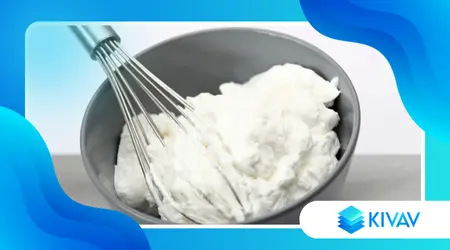
Know How to stabilize whipped cream for Italian desserts It is the fundamental secret to transforming a homemade dessert into a masterpiece of high-quality pastry that stands the test of time and heat.
Announcements
In this guide, we'll explore the scientific methodologies and natural ingredients needed to achieve solid structures. We'll analyze professional techniques accessible to anyone who wants to perfect their culinary skills in 2025.
Article summary
- The science behind shelf-stable whipped cream.
- Because temperature affects the final density.
- Which natural thickeners to choose for perfect results.
- Comparison table of stabilization methods.
- Answers to frequently asked questions about pastry making.
Why does whipped cream lose volume and consistency?
Understanding the physics of dairy fats helps prevent the collapse of toppings. Cream is an emulsion of fat globules in water that traps air bubbles during mechanical processing.
As the temperature rises, the fat network weakens dramatically. This phenomenon causes the whey to separate, making the mixture runny and lacking the structural strength necessary for layered cakes.
Many pastry chefs underestimate the importance of pre-chilling bowls and whisks. Using cold tools ensures that fat crystals remain solid, allowing air to remain permanently trapped within the mixture.
Announcements
What are the best stabilizers for Italian pastry making?
There are several options for those looking How to stabilize whipped cream for Italian desserts without altering its delicate flavor. Gelatin sheets represent the classic standard for monumental and long-lasting cakes.
Cornstarch or powdered sugar containing starches offer a quick and simple solution. These ingredients absorb excess moisture, preventing whey from forming at the bottom of the container.
Find out more: Italian-style baking in foil
In recent years, mascarpone has become a favorite cheese because of its natural affinity with Mediterranean flavors. Adding a small amount of extra fat creates a velvety, long-lasting consistency.
How to use gelatin for a professional hold?
The "gelatin bloom" technique requires pinpoint precision to avoid unpleasant lumps in the cream. The sheets must be hydrated in ice water before dissolving them in a small amount of hot cream.
Before incorporating the resulting liquid into the cold mixture, wait until it reaches room temperature. Too abrupt a transition from hot to cold would create annoying rubbery filaments instead of a smooth texture.
This method ensures that the decorations retain their original shape for over forty-eight hours in the refrigerator. It's ideal for outdoor events where humidity typically plays a critical and destructive role.
You can learn more about the regulations on the quality of milk and dairy products by consulting the official portal of the Ministry of Agriculture, Food Sovereignty and Forestry, a point of reference for food safety.

When to choose mascarpone as a structural agent?
Mascarpone isn't just an ingredient in tiramisu, it's also a powerful mechanical stabilizer. Its high saturated fat content gives it a stronger consistency than cream alone.
Mixing about 100 grams of mascarpone for every 250 milliliters of cream guarantees extraordinary results. This ratio maintains the typical lightness of whipped cream, while adding a creamy note and unparalleled structural stability.
It's the best choice for decorating cream puffs or creating internal layers in heavy cakes. The resulting density allows you to use very detailed piping tips without losing the defined edges.
What are the alternative plant-based stabilizers?
Those following specific diets can opt for agar-agar, an algal derivative with exceptional gelling properties. Unlike animal gelatin, agar-agar requires a brief boil to activate its polymer chains.
Another modern option is to use xanthan gum in infinitesimal doses. This polysaccharide stabilizes air bubbles without weighing down the palate, maintaining a sensation of freshness typical of freshly whipped cream.
Interesting: Lemon ravioli with burrata cream and basil
Plant protein isolates are gaining ground in the culinary research labs of 2025. These extracts offer superior water binding capacity, ensuring the dessert remains perfect even after several hours.
Comparison of cream stabilization methods
| Method | Recommended quantity | Stability duration | Ideal for |
| Jelly | 2g per 250ml | Up to 48 hours | Wedding cakes, buffets |
| Mascarpone | 100g per 250ml | 24-36 hours | Piping bag decorations |
| Corn Starch | 1 teaspoon | 12 hours | Immediate consumption |
| Powdered Milk | 1 tablespoon | 18 hours | Light mousses |
How to prevent cream from turning into butter? How to stabilize whipped cream for Italian desserts
The line between perfectly whipped cream and butter is extremely thin and dangerous. Excessive mixer speed can overheat the fats, causing the membranes of the fat cells to rupture permanently.
Observe the changes in texture carefully: when the whisk leaves deep grooves, stop immediately. Over-whipped cream loses its characteristic shine, becoming opaque and grainy on the palate.
If you notice the first signs of separation, try adding a spoonful of cold liquid cream. By gently stirring by hand, you may be able to recover the emulsion before the process becomes completely irreversible.

Which tools improve the stabilization process?
Stainless steel bowls are preferable to plastic ones for their cold-retention properties. Some professional models have a double bottom for adding crushed ice during processing.
Fine-wire whisks are essential tools for incorporating the maximum amount of air possible. Correct tool geometry reduces whipping time, limiting mechanical heating of fresh ingredients.
For those seeking pinpoint perfection, using a digital immersion thermometer is highly recommended. Keeping the mixture below 4 degrees Celsius during each stage ensures the technical success of the operation.
How to Stabilize Whipped Cream for Italian Desserts
Learn How to stabilize whipped cream for Italian desserts It elevates the quality of every culinary creation, ensuring a lasting professional look. From gelatin to mascarpone, each method offers specific benefits for different needs.
Experimenting with these techniques allows you to tackle even the most complex recipes with confidence. Consistent selection of excellent ingredients, however, remains the most important secret ingredient for every pastry chef.
For further technical information on the chemical properties of food fats, visit the website Veronesi Foundation, which regularly publishes studies on food science and health.
Frequently Asked Questions
Can I stabilize already whipped cream?
It's difficult to work on a whipped mixture without completely deflating it. However, gently folding in a little sifted powdered sugar can help absorb any residual surface moisture.
Does sugar affect stability?
Yes, adding sugar at the beginning of the process can delay the formation of the structure. It's best to add the sweetener only when the cream has reached a semi-whipped and stable consistency.
Why does my stabilized cream have lumps?
Lumps usually result from gelatin that hasn't dissolved properly or that was added too cold. Make sure each thickener is perfectly fluid and smooth before finally combining it with the cream.
How long can it stay out of the fridge?
Even when stabilized, cream remains a perishable product and sensitive to high temperatures. Never store it at room temperature for more than two hours to ensure food safety and aesthetic integrity.
Can I use condensed milk?
Condensed milk acts as both a stabilizer and a sweetener, creating a very dense texture. It's an excellent technique for quick fillings that require a hint of caramel flavor.
++ Whipping Cream for Desserts
++ Techniques and Secrets for Perfect Results
