
Sweet focaccia from Susa: the Piedmontese specialty that combines bread and dessert.
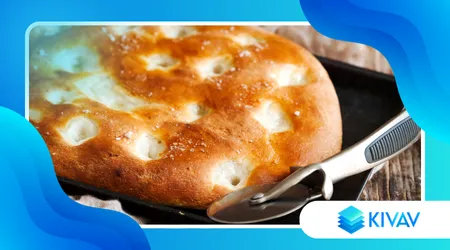
There Sweet focaccia from Susa It represents a treasure of Piedmontese baking, capable of transforming simple ingredients into an authentic sensory experience, suspended between everyday bread and festive dessert.
Announcements
This article explores the deep roots of this Turin-based delicacy, analyzing its preparation techniques, the selection of raw materials, and the cultural significance it holds in the contemporary Italian gastronomic landscape.
What is Susa sweet focaccia and why is it unique?
Define the Sweet focaccia from Susa As a simple leavened product, it would be reductive due to its structural complexity. It is a traditional baked product, typical of the Susa Valley.
Its uniqueness lies in its texture, which perfectly balances the softness of the inside with a caramelized crust. The sugar, generously distributed before baking, creates a thin, crunchy film.
Unlike the savory versions, this variation emphasizes the use of mountain butter, a key ingredient in ensuring its aroma. Local history holds that it was prepared during major religious holidays.
Announcements
Today, thanks to its recognition as a Traditional Food Product (PAT), the recipe is rigorously protected by local bakers. Every bite reflects the identity of a proud and generous mountain region.
How is sweet focaccia from Susa prepared?
The realization of the Sweet focaccia from Susa It requires patience and masterful management of the natural leavening.
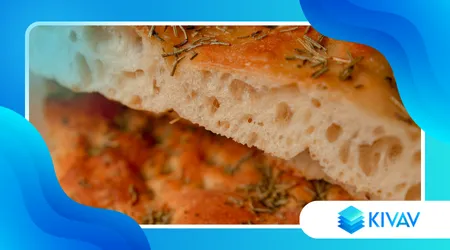
Time is the secret ingredient to achieving fine alveoli and superior digestibility.
The process begins with a dough made from soft wheat flour, fresh eggs, sugar, and butter. The kneading must be vigorous to develop a strong and highly elastic gluten network.
After an initial leavening, the dough is manually spread into round pans. During this stage, the baker creates dimples on the surface, designed to accommodate additional flakes of butter and generous amounts of granulated sugar.
Cooking takes place in static ovens at high temperatures, allowing the sugar to melt without burning.
The heat transforms the internal moisture into steam, lifting the dough and giving it its typical golden disc shape.
For those who wish to delve deeper into professional baking techniques, the website of Red Shrimp offers detailed guides on Italian regional excellence and on selecting the most suitable flours.
Why is Susa's sweet focaccia a symbol of Piedmont?
The importance of the Sweet focaccia from Susa Its uniqueness lies in its ability to resist modern food standardization. It represents the inextricable link between local agriculture and the art of baking in Alpine communities.
In Piedmont, the culture of sweet bread is deeply rooted, but the Susa version stands out for its simplicity. It contains no candied fruit or raisins, focusing entirely on the quality of the yeast.
Its historical value is evidenced by documents dating back centuries, when white bread was a luxury.
Find out more: Pizza with white wine dough
Offering this focaccia meant celebrating abundance and hospitality towards the passing stranger.
Nowadays, tourists visit the Susa Valley specifically to buy fresh produce from the historic bakeries.
This form of food tourism supports the local economy, preserving ancient crafts that are at risk of extinction.
Technical and Nutritional Data Sheet
| Characteristic | Technical Detail | Quality Notes |
| Basic Ingredients | 00 flour, butter, eggs, sugar | Certified local raw materials |
| Rising Time | 8 – 12 hours total | Natural leavening (brewer's yeast or mother yeast) |
| Consistency | Soft with caramelized crust | Balance between moisture and crunchiness |
| Conservation | 3 – 5 days | In a cool, dry place |
| Caloric Intake | About 380 kcal per 100g | Energy and nutrient product |
Original Recipe: Sweet Focaccia from Susa
Preparing this leavened product requires precision and patience. Here's how to make this authentic Segusina specialty right in your own kitchen.
Ingredients
- 500g of soft wheat flour type 00 (medium strength)
- 250g of high quality butter (at room temperature)
- 150g of granulated sugar (plus more for coating)
- 3 Fresh whole eggs
- 15g of fresh brewer's yeast (or 150g of refreshed sourdough starter)
- 5g of fine salt
- 50ml of warm whole milk
- Grated zest of an organic lemon (optional)
Step by Step Preparation
1. Yeast activation
In a small bowl, dissolve the yeast in the warm milk with a teaspoon of sugar. Let it sit for about 10 minutes until a light foam forms on the surface.
2. Main dough
In a stand mixer (or on a pastry board), pour the flour and create a well. Add the sugar, eggs, and yeast mixture. Begin mixing the ingredients on low speed or by hand, gradually incorporating the flour.
++ Roman-style puntarelle salad
3. Insertion of fats
When the dough begins to come together, add the softened butter, a little at a time. Don't add the next piece until the previous one has been completely absorbed.
Finally, add the salt and lemon zest. Continue kneading for at least 15-20 minutes until the gluten is smooth, elastic, and shiny.
4. First leavening
Shape the dough into a ball and place it in a greased bowl. Cover with a damp cloth or plastic wrap and let it rise in a warm place (about 26°C) until doubled in size (about 2-3 hours).
5. Shaping and laying out
Gently deflate the dough and transfer it to a previously buttered round pan. Spread it out with your fingertips, starting from the center and working outward, to a thickness of about 2 centimeters.
6. Second leavening
Let the focaccia rest in the pan for another hour. After this time, use your fingers to create small dimples all over the surface, typical of the Sweet focaccia from Susa.
7. Seasoning and Cooking
Sprinkle the surface generously with granulated sugar and add a few small flakes of extra butter in the hollows. Bake in a preheated static oven at 200°C for about 15-20 minutes.
The focaccia should be golden brown inside and have a well-caramelized sugary crust on the surface.
8. Cooling
Remove from the oven and let cool on a wire rack before serving. The ideal consistency is achieved if eaten within a few hours of baking.
Chef's Tip: For a professional result, lightly brush the surface with a thin layer of water before sprinkling the sugar; this will help create an even crispier and more uniform caramelized crust.
Conclusion
There Sweet focaccia from Susa It's not just a food, but a cornerstone of the cultural identity of the Susa Valley. Over the centuries, it has maintained its recipe intact, becoming a symbol of authenticity and artisanal dedication.
Choosing this product means supporting small local producers and preserving a unique gastronomic biodiversity.
Whether enjoyed warm or at room temperature, it always provides a moment of pure gastronomic pleasure.
We invite all food enthusiasts to discover this leavened product, perhaps by visiting the historic workshops in the city of Susa.
The quality of the raw materials and the manual expertise really make the difference in the final result.
For further information on the certifications of traditional products, you can consult the official portal of the Piedmont Region, where all the protected specialties of the area are listed.
Frequently Asked Questions
Can I freeze Susa sweet focaccia?
Yes, you can freeze it by carefully wrapping it in plastic wrap or an airtight bag. To regenerate it, simply heat it for a few minutes in a hot oven to restore its original fragrance and softness.
What is the difference between sweet Ligurian focaccia and focaccia bread?
The Susa version tends to be taller and softer than the Ligurian version. Furthermore, the use of butter is much more pronounced in Piedmont, while olive oil is often used in Liguria.
Where can I buy the original sweet focaccia from Susa?
The best places to find them are the historic bakeries located in the center of Susa and the surrounding towns. Always look for the seal certifying local artisanal production to ensure authenticity.
Does it contain artificial preservatives?
Authentic artisanal products never use preservatives or chemical additives. The product's shelf life is guaranteed by the quality of the natural leavening process and the high concentration of sugars on the outside.
Is it suitable for vegans?
No, the traditional recipe calls for the use of butter and eggs, essential ingredients for the structure of the dessert.
Currently, there are no official vegan variants that can boast the original traditional Segusino name.
++ A traditional Piedmontese recipe
