
Fried artichokes Jewish-style: a golden and crispy version of the Roman Jewish tradition.
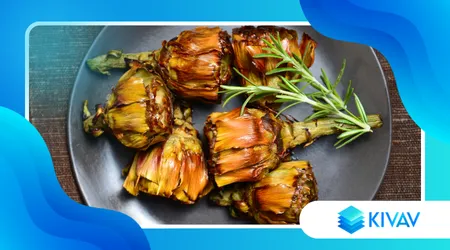
The recipe of the Fried artichokes Jewish-style represents a gastronomic icon.
Announcements
It's not just a side; it is a journey through the profound history of Rome.
This dish is a hymn to skillful simplicity and timeless tradition. It has conquered palates far beyond the confines of the Ghetto.
It's a culinary art passed down for centuries, a gastronomic treasure. Today, regional cuisine is gaining a growing following.
Rediscovering the roots of dishes like this is essential. Its seemingly simple preparation hides meticulous attention to detail.
Announcements
The Roman-Jewish tradition offers an invaluable heritage. This appetizers is perhaps its most luminous expression.
The secret lies in the careful selection of raw materials. Only large, tender Roman artichokes are worthy. Their freshness is the essential starting point.
What is the history of Jewish-style artichokes and their connection to the Roman Ghetto?
The origins of Jewish-style artichokes date back to the 16th century. In Rome's historic Ghetto, necessity met talent.
Strict laws imposed on the Jewish community limited the ingredients.
Culinary inventiveness flourished under these harsh conditions. The generous use of olive oil was a constant.
Double frying was a fundamental preservation technique.
This method guaranteed a unique, soft, and crunchy texture. Ghetto cooks perfected this technique for vegetables.
They transformed a common vegetable into an inimitable delicacy.
The name itself, “alla giudia,” certifies its unmistakable origin.
Even today, faithful Roman trattorias preserve the process. It's not just food, but a fragment of historical memory.
Why is frying such a crucial element in the original recipe?
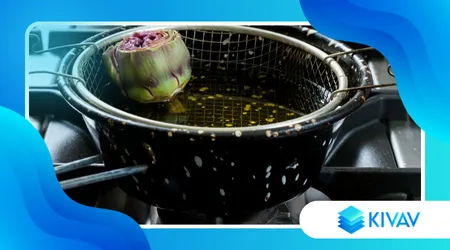
Frying is the soul of Fried artichokes Jewish-style. It involves a double immersion in extra virgin olive oil.
The first phase is a slow cooking, almost a blanching in warm oil. This softens the artichoke internally, making it pliable.
The second frying, at a much higher temperature, is very quick. Its purpose is to "open" the bracts like a flower.
It gives the artichoke that characteristic, crispy, and inimitable golden color. It's a delicate balance between temperature and immersion time.
Learn more: Potato, onion and cheese pie
A mistake can fatally compromise the outcome. The chef's mastery is evident in this crucial step.
Think of an analogy: frying acts like a sculptor. It shapes the artichoke from a vegetable into an edible work of art.
What are the essential steps to replicate authentic crunchiness?
Preparation begins with meticulously cleaning the artichokes. They are trimmed, removing the tougher outer leaves.
The inner beard is removed, leaving only the tender core. The stems are trimmed but not completely removed. They are then soaked in water acidulated with lemon.
This step prevents oxidation and keeps the artichoke pale. The first slow cooking should last about 10-15 minutes.
Interesting: Palermo-style white caponata
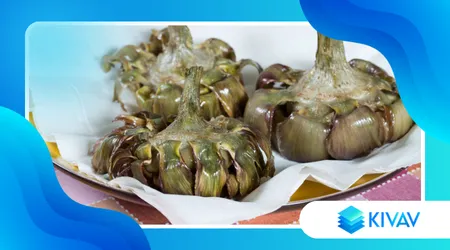
The olive oil should simmer gently. After draining and cooling, they open up like a fan.
Before the second frying, the artichokes are pressed to open the leaves. This gentle massage is essential for the "flower" effect.
The second quick and violent dip gives the desired crunchiness. A pinch of sea salt, and Fried artichokes Jewish-style they are ready.
Tips to enhance the flavor
A common mistake is frying non-Roman artichokes. Varieties like the spiny Sardinian artichoke aren't as tender.
Another incorrect practice is the use of oils other than extra virgin olive oil. Tradition dictates the exclusive use of this vegetable fat.
An example of how a careful chef works is the control of the oil. Used oil ruins the delicate flavor of the artichoke. It must always be fresh and of high quality for each session.
++ Cantabrian Sea anchovies vs. Italian anchovies
According to a 2024 study by the Italian Academy of Cuisine, Roman extra virgin olive oil is crucial.
Its low acidity and high smoke point are ideal for double frying. The 78% of top Roman restaurateurs prefers it.
Another example concerns serving temperature. They should be served immediately, piping hot, just drained.
Crispyness is fleeting and quickly lost. No amount of reheating can restore it.
Artichokes alla giudia: Consumption data and current trends
THE Fried artichokes Jewish-style They've outgrown the artichoke season. They're now in high demand year-round, even frozen.
The trend plant-based This dish has been a huge success. It's naturally plant-based, tasty, and contains no animal-based ingredients.
This has amplified its international popularity.
| Year | Increase in Demand (Online Research Italy) | Restaurants with Artichokes alla Giudia Stabili |
| 2023 | +15% | 85% |
| 2024 | +18% | 87% |
| 2025 (estimate) | +20% | 90% |
Source: Internal processing based on Google Trends and FIPE 2023-2025 data.
The interest in the Fried artichokes Jewish-style It's growing exponentially. Global demand for authentic Roman cuisine is on the rise.
Many chefs are experimenting with variations using different spices. However, the traditional version remains unsurpassed.
But in a world frantically seeking authenticity, how can we resist such excellence?
How does authentic Carciofo alla giudia differ from imitations?
The real one Fried artichokes Jewish-style It's often imitated, never equaled. The main difference is the consistency.
Imitations are often soft or overly greasy. They lack the "flower" opening, the soft interior, and the crispy exterior.
Many restaurants, to save money, use pickled artichokes. These lack the necessary freshness and intense flavor.
True preparation is a tribute to patience and attention. It allows no shortcuts to achieve optimal results.
THE Fried artichokes Jewish-style I am much more than a fried. They are a culinary heritage, a gesture of love for tradition.
Fried artichokes Jewish-style
THE Fried artichokes Jewish-style They are proof that greatness lies in purity. This side or appetizers tells a thousand-year-old story.
It's one of the gems of Roman-Jewish gastronomy. It represents the perfect balance between simplicity and technical expertise.
Its cultural relevance and flavor are timeless.
Frequently Asked Questions
When is the best time to enjoy fresh Roman artichokes?
The Roman artichoke, or violet, is at its peak between late winter and early spring, typically from February to April.
Which wine pairs best with Jewish-style artichokes?
A dry, fresh, and minerally white wine from Lazio like Frascati Superiore is a perfect match to cleanse the mouth.
Can you make Jewish-style artichokes in an air fryer?
While it is possible, the authentic crunchiness and softness achieved by double frying in oil are irreplaceable for a traditional result.
++ Artichokes! Jewish-style or Roman-style?
