
Lamon Beans: Italian Legumes Worth Promoting
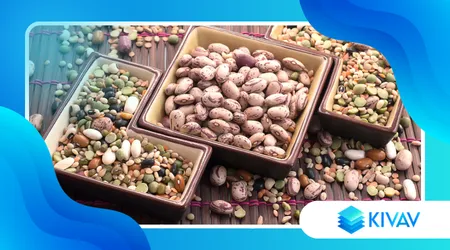
The gastronomic panorama of Veneto holds rare treasures, among which stand out Lamon beans, an excellent PGI product that represents the rural identity of humility and resistance in the folds of the Belluno area.
Announcements
It's not just food; it's a fragment of history that survives industrial homogenization.
Contents summary
- The protected origin and the connection to the land.
- Beyond protein: elite nutritional value.
- The four souls of legumes: a comparison of varieties.
- Chemical analysis and systemic well-being.
- Tradition in the kitchen: the recipe for "Pasta e fagioli".
- FAQ: Home Management and Conservation.
What exactly are PGI Lamon beans?
Identifying these legumes means talking about the Phaseolus vulgaris, a plant that has found an almost magical microclimate in the Lamon and Sovramonte plateau.
The real difference, the one you taste at first bite, is the peel: so thin that it disappears during chewing, eliminating the woody consistency typical of commercial varieties.
PGI certification isn't just bureaucracy; it's a pact between farmer and consumer that guarantees the absence of agronomic manipulation.
Announcements
The climate of the Dolomites requires a slow pace. This forced wait concentrates the sugars and mineral salts, making the final product a perfect blend of sweetness and natural flavor.
The selection of seeds is still done by hand, an ancient ritual.
This process ensures that only the best genetic profiles reach the next planting, preserving a biodiversity that we risked losing under the advance of intensive monocultures.
Why is this product considered an Italian superfood?
We often overlook exotic superfoods while ignoring what grows right in our backyard. These legumes offer an amino acid profile that, when paired with an ancient grain, rivals animal protein sources.
There is something profoundly honest about a food that nourishes without burdening the digestive system.
The fiber present not only helps with regularity, but acts like a sponge for glucose, stabilizing energy for hours.
It is an effectiveness that many modern supplements try to replicate artificially, failing where Belluno nature has already triumphed.
Potassium and magnesium are not added here; they are an integral part of the plant's cellular tissue.
Choosing this variety also means making a political choice. Supporting niche production protects the mountain landscape from agricultural desertification.
++ Sorrento PGI Lemons: How to Use Them in Cooking, Desserts, and Liqueurs
It's a way of saying that the value of a territory is not measured in quantity, but in its ability to generate absolute quality in limited spaces.
What are the four main varieties to know?
There isn't just one Lamon bean, but a family with distinct characteristics. The "Spagnolit" is the jewel in the crown: small, round, almost shy, but with a firm flesh that makes it the undisputed star of gourmet salads where texture is everything.
The "Caldon" is the opposite: generous in size, with red veins that look painted. It's the king of soups, capable of flaking slightly to create that creamy texture that warms winter.
The “Spagnol”, on the other hand, focuses on delicacy, with an ovoid shape and a buttery texture that wins you over at first touch.
Finally, the “Canalino”, often misunderstood for its slightly tougher skin, but which repays with a persistent, almost aromatic flavour.
Find out more: Stracchino: the fresh Lombard cheese perfect for focaccia
Knowing how to distinguish these varieties allows you to transform a humble dish into a complex sensory experience, adapting the legume to the chosen cooking technique.
Technical specifications and nutritional comparison
| Value (per 100g dry) | Medium Content | Systemic Impact |
| Proteins | 23 g | Tissue reconstruction |
| Fibers | 17 g | Glycemic control |
| Complex carbohydrates | 50 g | Muscle fuel |
| Fats | 1.5 g | Optimal lipid profile |
| Iron | 6.7 mg | Oxygen transport |
Tradition on a Plate: Belluno-Style Pasta and Beans
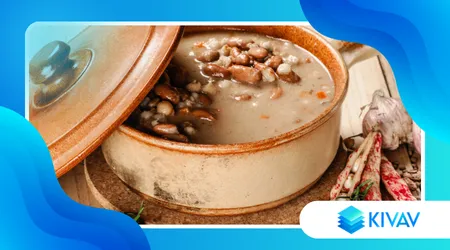
Preparing this dish isn't a matter of speed, but of patience. After soaking the legumes for 12 hours, they are slowly cooked in cold water with a sprig of sage.
The secret? A small amount of beans is blended to create a creamy "bed" on which to place the pasta.
Ingredients: 300g of Caldon variety, 200g of egg pasta (maltagliati), a well-cleaned Parmesan rind, black pepper and extra virgin olive oil.
Cooking must take place in a terracotta pot, which distributes heat with a gentleness that steel cannot emulate.
For technical details on the production area and certified variants, the Lamon Bean Protection Consortium offers a comprehensive overview that every enthusiast should consult to avoid gross counterfeiting.
What benefits do they bring to the environment and the territory?
Growing these plants is an act of applied ecology. Being legumes, they naturally fix nitrogen in the soil, eliminating the need for heavy chemicals.
It is a closed cycle where the earth gives and receives at the same time, maintaining the balance of the pre-Alpine aquifers.
The farmers of Lamon are true guardians of the landscape. Without their work, the historic terraces and dry stone walls would succumb to erosion.
Purchasing this product is, in effect, an investment in the hydrogeological integrity of the Belluno mountains.
This micro-industry slows the depopulation of the upper valleys. It creates a compelling reason to stay, to innovate without betraying one's roots.
++ Ligurian-Style Octopus and Potato Salad: A Timeless Seafood Classic
Gastronomy thus becomes the driving force behind an ethical economy that places humanity and nature at the center of profit, not vice versa.
When to harvest and how to store the product?
Harvest time, between August and September, is a critical time window when humidity must be perfect.
The pods are opened by hand, a time-consuming and respectful process. They are dried in the shade, away from direct sunlight, which would fade their vibrant colors.
At home, glass is your only ally. An airtight jar in a dark place preserves the properties for months. A trick of the old farmers?
A dried bay leaf in the container acts as a natural pest repellent, without altering the aromatic bouquet of the legume.
The fresh product, if frozen immediately after shelling, maintains an incredible fragrance for the winter months.
However, it is the dry version that represents the real culinary challenge, requiring that slow gesture that almost seems like a pre-dinner meditation.
A gastronomic heritage to be protected
In an age of fast food and flat flavors, returning to these excellences is an act of rebellion.
The versatility of this legume makes it incredibly contemporary, capable of moving from peasant tables to starred menus without losing its dignity.
Protecting these varieties means protecting ourselves from the loss of palate memory.
Incorporating these pearls of the Dolomites into our diet is not only a healthy choice, but also a tribute to those who have chosen not to surrender to global standardization.
For a broader view on the policies for the protection of typical Italian products, the website of Ministry of Agriculture, Food Sovereignty and Forestry It provides the tools to understand the profound value of our food sovereignty.
FAQ – Frequently Asked Questions
Is the product suitable for people with diabetes?
Absolutely. Its low glycemic index and high fiber content make this legume ideal for maintaining stable blood sugar levels, providing prolonged satiety without insulin spikes.
Where can I buy the original without risk?
It's essential to look for the PGI mark on the packaging. The best quality is often found at local markets or through the direct channels of member producers, especially in the autumn months.
Why is the skin so different from common beans?
It's a question of altitude and centuries-old genetic selection. The low cellulose content in the skin is what makes the Lamon variety unique for its digestibility and velvety texture.
Is soaking really necessary?
Yes, it's essential for dried seeds. It not only softens them, but also activates the enzymes that make nutrients bioavailable and eliminates substances that cause abdominal bloating.
++ A treasure of tradition, a unique product
++ Lamon Bean, a PGI from our garden
