
Contemporary risotto with crunchy and velvety textures
Risotto contemporaneo con consistenze unisce la cremosità avvolgente del riso italiano alla piacevole croccantezza di ingredienti tostati, creando un contrasto sorprendente a ogni boccone.
Announcements
Questa versione valorizza tecniche semplici, sapori equilibrati e consistenze diverse, trasformando un primo piatto tradizionale in una proposta moderna, elegante e facilmente replicabile anche nella cucina di casa, senza complicazioni inutili.
In questa ricetta troverai:
- come ottenere una mantecatura davvero vellutata;
- come preparare un elemento croccante senza appesantire il piatto;
- dosi, tempi e passaggi precisi per quattro persone;
- consigli pratici per mantenere intatto il contrasto delle consistenze.
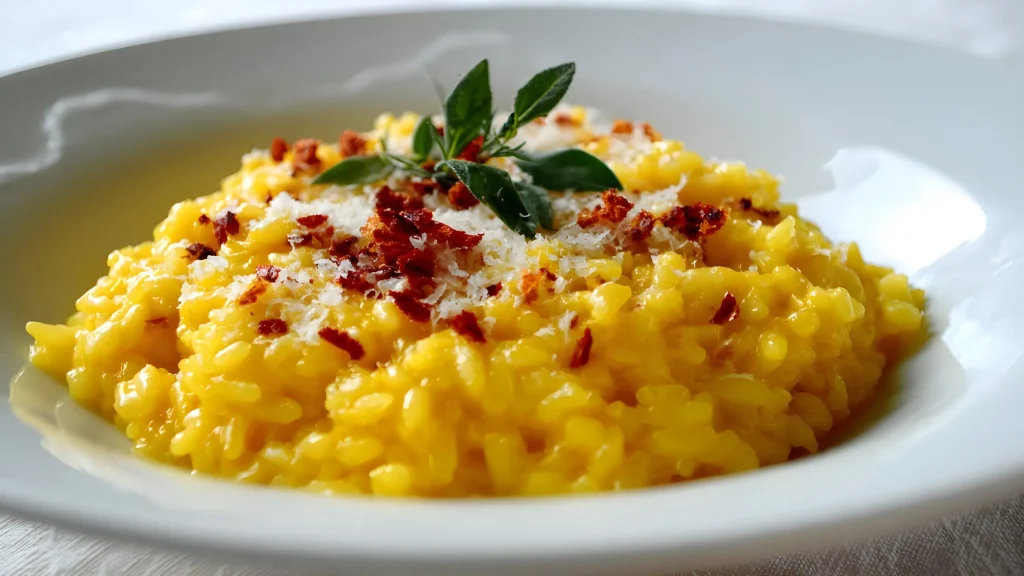
Che cosa rende contemporaneo un risotto?
Un risotto moderno non richiede ingredienti eccentrici: punta soprattutto sull’equilibrio tra struttura, temperatura, aromi e consistenze, mantenendo riconoscibile il carattere del riso italiano.
La parte cremosa deve avvolgere i chicchi senza trasformarli in una massa compatta, mentre gli elementi croccanti devono arrivare nel piatto all’ultimo momento.
Announcements
Per ottenere questo risultato, useremo Carnaroli, Parmigiano Reggiano, burro, funghi, nocciole e una piccola componente acida.
Il risultato resta elegante, ma facilmente replicabile nella cucina domestica.
Ingredients for 4 people
Per il risotto
- 320 g di riso Carnaroli
- 250 g di funghi champignon
- 1 scalogno piccolo
- circa 1 litro di brodo vegetale caldo
- 80 ml di vino bianco secco
- 45 g di burro freddo
- 60 g di Parmigiano Reggiano grattugiato
- 2 cucchiai di olio extravergine d’oliva
- sale e pepe nero quanto basta
Per il croccante
50 g di nocciole
30 g di pangrattato
1 cucchiaino di timo fresco
scorza finemente grattugiata di mezzo limone
Per la finitura
1 cucchiaino di succo di limone
qualche foglia di prezzemolo
olio extravergine d’oliva a crudo
Come preparare il risotto passo dopo passo
Prepara il brodo e il croccante
Mantieni il brodo vegetale caldo in una casseruola separata, senza farlo bollire vigorosamente. La temperatura costante evita di interrompere la cottura del riso durante l’aggiunta graduale del liquido.
Trita grossolanamente le nocciole e mescolale con pangrattato, timo e scorza di limone. Tosta tutto in una padella asciutta per quattro o cinque minuti, mescolando spesso.
++ Sardinian fregola with vegetables
Quando il composto diventa dorato e profumato, trasferiscilo immediatamente in un piatto freddo. Il calore residuo, infatti, potrebbe continuare la tostatura rendendo amaro il croccante.
Rosola i funghi
Pulisci i funghi con cura, tagliali a fettine regolari e saltali in una padella calda con un cucchiaio d’olio, mantenendo una fiamma medio-alta.
++ Butter and sage ravioli revisited with modern citrus notes
Cuocili per cinque o sei minuti, finché risultano dorati ma ancora consistenti. Regola leggermente il sale e conserva una parte dei funghi per la decorazione finale.
Tosta il riso
Nella casseruola del risotto, fai appassire lo scalogno tritato con un cucchiaio d’olio per circa due minuti, senza lasciarlo colorire eccessivamente.
Aggiungi il Carnaroli e tostalo per due minuti, mescolando continuamente. I chicchi devono diventare caldi e leggermente traslucidi ai bordi, senza bruciare.
++ How to Make a Restaurant-Grade Red Wine Reduction
Versa il vino bianco e lascia evaporare completamente la parte alcolica. Solo dopo questa fase inizia ad aggiungere il brodo caldo, un mestolo alla volta.
Cuoci e controlla la consistenza
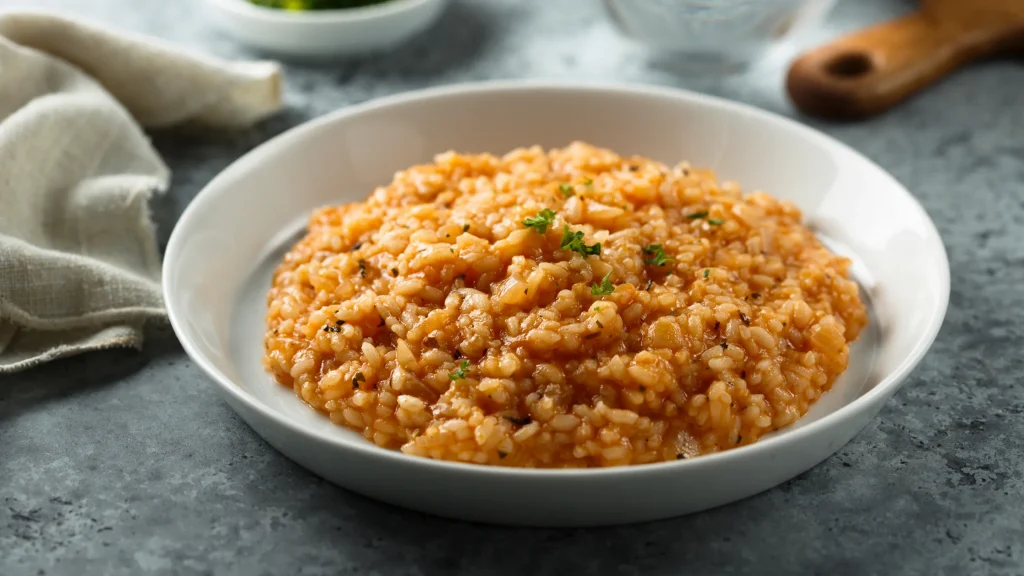
Continua la cottura per circa 16-18 minuti, aggiungendo altro brodo quando il liquido precedente viene quasi assorbito. Mescola spesso, ma senza lavorare aggressivamente il riso.
Dopo circa dieci minuti, incorpora la maggior parte dei funghi. Assaggia verso la fine: il chicco dovrebbe risultare cotto all’esterno e ancora leggermente consistente al centro.
La quantità di brodo può cambiare in base alla casseruola, alla fiamma e al riso. Per questo motivo, la consistenza finale conta più della quantità esatta di liquido.
Manteca per ottenere una crema vellutata
Spegni il fuoco quando il risotto appare ancora leggermente morbido e fluido. Aggiungi burro freddo e Parmigiano, poi mescola energicamente per incorporare aria e grassi.
Lascia riposare il risotto per un minuto, quindi aggiungi il succo di limone. L’acidità deve ravvivare il sapore, senza rendere il piatto apertamente aspro.
Se necessario, aggiungi un cucchiaio di brodo caldo. Il risotto ideale deve muoversi lentamente quando inclini la casseruola, formando una crema morbida intorno ai chicchi.
Per approfondire le corrette pratiche domestiche di preparazione e conservazione, consulta le indicazioni del Ministero della Salute sulla sicurezza domestica degli alimenti.
Qual è il segreto per mantenere le consistenze?
Il contrasto funziona soltanto se ogni componente conserva la propria identità. Il risotto deve essere caldo e cremoso, mentre nocciole e pangrattato devono rimanere asciutti e friabili.
Per questo motivo, non aggiungere il croccante durante la cottura. Distribuiscilo direttamente nei piatti, appena prima di servire, così conserverà profumo, struttura e friabilità.
Anche i funghi possono contribuire al gioco tattile: alcuni entrano nella crema, altri restano sopra, leggermente più dorati e consistenti.
Risotto tradizionale e versione contemporanea: qual è la differenza?
| Element | Risotto classico | Versione contemporanea |
|---|---|---|
| Consistency | Principalmente cremosa | Cremosa e croccante |
| Technique | Tostatura, brodo, mantecatura | Stesse basi con elementi separati |
| Contrasto | Limitato | Più evidente |
| Finish | Parmigiano e burro | Croccante, limone, erbe |
| Plating | Essential | Strutturato e dinamico |
La differenza non sta quindi nell’abbandonare la tradizione, ma nell’aggiungere una seconda dimensione sensoriale senza compromettere la tecnica del risotto italiano.
Come impiattare il risotto contemporaneo
Distribuisci il risotto in piatti piani preriscaldati e battine delicatamente il fondo con il palmo della mano, favorendo una distribuzione uniforme della crema.
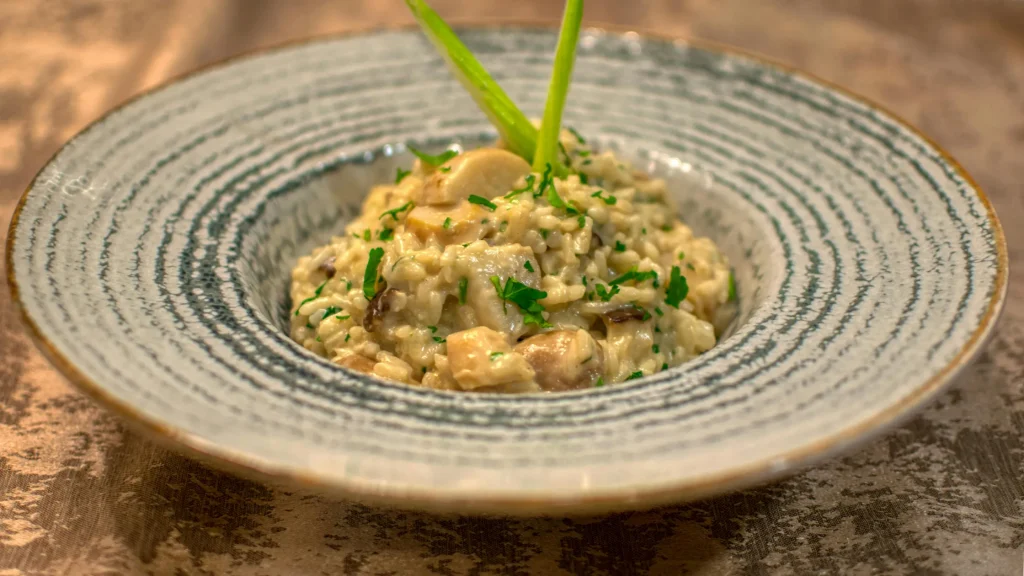
Completa con i funghi tenuti da parte, una cucchiaiata di nocciole croccanti, qualche foglia di prezzemolo e poche gocce d’olio extravergine.
Evita di coprire completamente la superficie con il croccante. Lascia zone cremose visibili: il contrasto deve essere immediatamente percepibile prima ancora del primo assaggio.
Come conservare eventuali avanzi?
Il risotto offre la sua consistenza migliore appena mantecato. Se rimane una porzione, raffreddala rapidamente, trasferiscila in un contenitore chiuso e conservala in frigorifero.
Il Ministero della Salute raccomanda di non lasciare gli alimenti cotti a temperatura ambiente e di conservarli correttamente in frigorifero quando non vengono consumati subito.
Il croccante va invece conservato separatamente in un contenitore asciutto. Aggiungilo soltanto dopo aver riscaldato il risotto, così eviterai di renderlo molle.
FAQ
Quale riso è migliore per questa ricetta?
Il Carnaroli rappresenta una scelta molto adatta perché mantiene bene la struttura durante la cottura e permette di ottenere una mantecatura cremosa senza perdere completamente la consistenza del chicco.
Posso sostituire le nocciole?
Sì. Mandorle, noci o semi di zucca possono creare un contrasto simile. Scegli ingredienti asciutti e tostali brevemente, evitando una tostatura eccessiva.
Perché il risotto diventa troppo asciutto?
Spesso la causa è una cottura prolungata dopo l’ultimo mestolo di brodo oppure una mantecatura insufficiente. Un cucchiaio di brodo caldo può recuperare parte della cremosità.
Posso prepararlo in anticipo?
Per ottenere la migliore consistenza, conviene servirlo subito dopo la mantecatura. Se devi conservarlo, segui le indicazioni ufficiali del Ministero della Salute sulla corretta gestione degli alimenti cotti.
Conclusion
The risotto contemporaneo con consistenze dimostra che innovare non significa complicare.
Bastano una crema ben mantecata, un croccante preparato separatamente e un accento acido per cambiare l’esperienza.
La tecnica rimane il vero punto di forza: tostatura corretta, brodo caldo, cottura controllata e mantecatura finale determinano un risultato equilibrato, elegante e soprattutto ripetibile.
Prova questa combinazione con funghi e nocciole, poi modifica il croccante seguendo la stagione. La struttura resterà la stessa, mentre aromi e ingredienti potranno cambiare liberamente.
++ Il risotto “irriverente” della Trattoria
++ Come trasformare il risotto avanzato in un piatto irresistibile
