
How to make a homemade pizza with a light, airy crust
Prepare an authentic homemade pizza with a light, honeycomb crust represents the main goal for every modern enthusiast.
Announcements
Achieving this result requires technique and excellent ingredients.
Today we'll discover the technical secrets to transforming your kitchen into a true artisanal Italian pizzeria.
We'll break down every essential detail you need to master baking at home.
In this guide, we will explore the crucial stages of the entire production process.
Announcements
By reading this article, you'll discover in detail the following key points to ensure your culinary success:
- The role of hydration in dough.
- How to select the right flours.
- The complete recipe step by step.
- The secrets to perfect cooking.

What does alveolation mean in contemporary Neapolitan pizza?
The term alveolation indicates the internal structure of the crust, rich in well-distributed air bubbles.
This gluten mesh retains gases throughout the entire natural leavening process.
A well-developed structure ensures superior digestibility and an irresistible external crunchiness.
The carbon dioxide expands in the oven creating wonderful, much-desired air pockets.
Achieving this effect requires careful management of resting times and temperatures.
Mixing water and flour is not enough; you need to have an excellent chemical awareness of the product.
How hydration works for extremely light leavened products
Water plays an absolutely key role in the development of highly digestible leavened products.
A hydrated dough facilitates the expansion of the gases trapped inside the gluten mesh.
For an excellent homemade pizza with a light, honeycomb crust, We always recommend a hydration level of between seventy and eighty percent. This percentage ensures extreme softness.
Handling moist and complex doughs requires a lot of manual dexterity and constant practical experience.
Using specific techniques such as reinforcing folds helps to dry the mass.
Which flour should you choose for highly hydrated dough?
The strength of the flour, indicated by the letter W, determines its ability to absorb liquids.
Choosing the wrong product compromises the entire structure of the leavened disc.
For long maturation at a controlled temperature, a medium-high strength flour is required.
The proteins form a tough network capable of withstanding fermentations lasting more than twenty-four hours.
Consult this comparison table carefully to better guide you in choosing the ideal flours.
++ High-Hydration Roman Pan Pizza: A Complete Beginner's Guide
The data faithfully reflect the technical standards recommended by professionals in the Italian milling sector.
| Flour Strength (W) | Maximum Recommended Hydration | Ideal Maturation Time | Main Use |
| W 180 – 220 | 55% – 60% | 4 – 6 hours | Direct and quick doughs |
| W 240 – 280 | 65% – 70% | 12 – 18 hours | Classic Neapolitan pizza |
| W 300 – 340 | 75% – 80% | 24 – 48 hours | Contemporary honeycomb pizza |
| W 350 – 400 | Over 80% | 48 – 72 hours | Large leavened products and baking trays |
The definitive recipe for the homemade pizza with a light, honeycomb crust
Let's now move on to operational practice with a balanced and rigorously tested formulation.
Interesting: Artistic focaccia decorated with vegetables and honeycomb dough
This procedure uses the direct method to maximize the development of the magnificent natural scents.
The strictly necessary ingredients
Weigh each item using a highly accurate digital scale.
The success of your homemade pizza with a light, honeycomb crust It depends on the exact proportions.
- 500g of strong type zero flour (W 300)
- 375g of very cold purified water (hydration 75%)
- 12g of fine iodized sea salt
- 3g of fresh organic brewer's yeast
- 10g extra virgin olive oil (optional)
The technical process step by step
Dissolve the fresh yeast completely in three hundred grams of very cold water.
Gradually add half of the sifted flour, immediately starting to mix with a wooden spoon.
Add the salt and the remaining water, pouring it in continuously.
Work the dough vigorously until it begins to come away from the sides of your bowl.
Transfer the soft dough to a clean surface and apply a series of folds.
Repeat this fundamental technical operation three times, letting the dough rest for about twenty minutes.
Place the now smooth mixture in a lightly oiled airtight container.
Leave to rest in the refrigerator for twenty-four hours, allowing the starch complexes present to mature very slowly through the enzymatic process.
Remove the cold container from the refrigerator and proceed to cut the loaves.
Form turgid two hundred and sixty gram spheres, closing them absolutely perfectly at the base to seal out the air.
++ Sfincia di San Giuseppe: the soft and creamy Sicilian dessert
Wait until the initial volume has doubled, keeping the loaves tightly covered.
This delicate final phase generally takes three to four hours, depending on the specific weather conditions.
Why invest in professional equipment for optimal cooking
The traditional home oven struggles to reach the extreme temperatures of professional pizzerias.
A Neapolitan pasta disc ideally cooks between four hundred and five hundred degrees.
Using a preheated refractory stone radically changes the final result of the product.
This tool accumulates intense heat and releases it quickly to the base of your pizza.
To learn more about the guidelines relating to food safety and suitable materials, you can read the Ministry of Health guidelines on materials in contact with food.
Place the baking stone firmly in the highest part of your common appliance.
Turn on the powerful grill to the highest level a few minutes before putting the pizza in the oven.
Roll out the soft dough by hand, very gently expanding the gases towards the outer edges.
Avoid squashing the circular perimeter to preserve the incredible structure created over time.
Cook quickly for about five or six minutes, constantly monitoring the browning process.
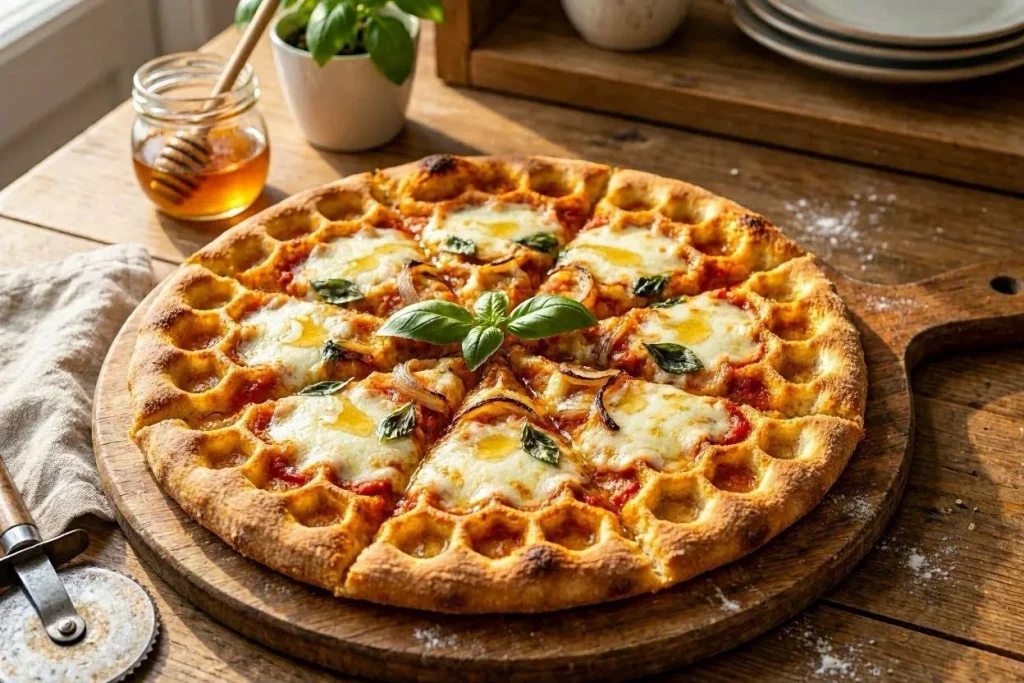
You will get a magnificent homemade pizza with a light, honeycomb crust, very ready.
Conclusion
Mastering the great contemporary leavened products requires a great deal of dedication, continuous methodical study, and a lot of patience.
The results will more than repay every single effort you put into your fun experiments.
By meticulously applying these technical guidelines, you will undoubtedly drastically improve the overall quality of your baked creations.
Each bite will give you a crunchy texture accompanied by an incredible melt-in-your-mouth feel.
Frequently Asked Questions
What's the absolute secret to a perfect homemade pizza with a light, airy crust?
The secret lies solely in the perfect combination of high hydration, strong flour and very long cold maturation.
These elements work synergistically to create a strong, expandable gluten structure.
Can I safely use ordinary dry yeast instead of fresh yeast?
Of course, you can easily replace the fresh yeast with classic dried brewer's yeast.
Calculate exactly one third of the required dose, therefore using one gram for this recipe.
Why does my dough feel unpleasantly tough and rubbery after baking?
This annoying defect generally results from insufficient leavening or from cooking for too long.
Low-heat ovens dry out the dough, ruining the fantastic homemade pizza with a light, honeycomb crust.
How can I properly store the dough if I can't cook it right away?
A mature dough can easily last up to seventy-two hours in the refrigerator.
For scientific information on natural fermentation processes, please consult the EFSA document on the safety of food fermentations.
++ How to make authentic Neapolitan pizza with a high crust
